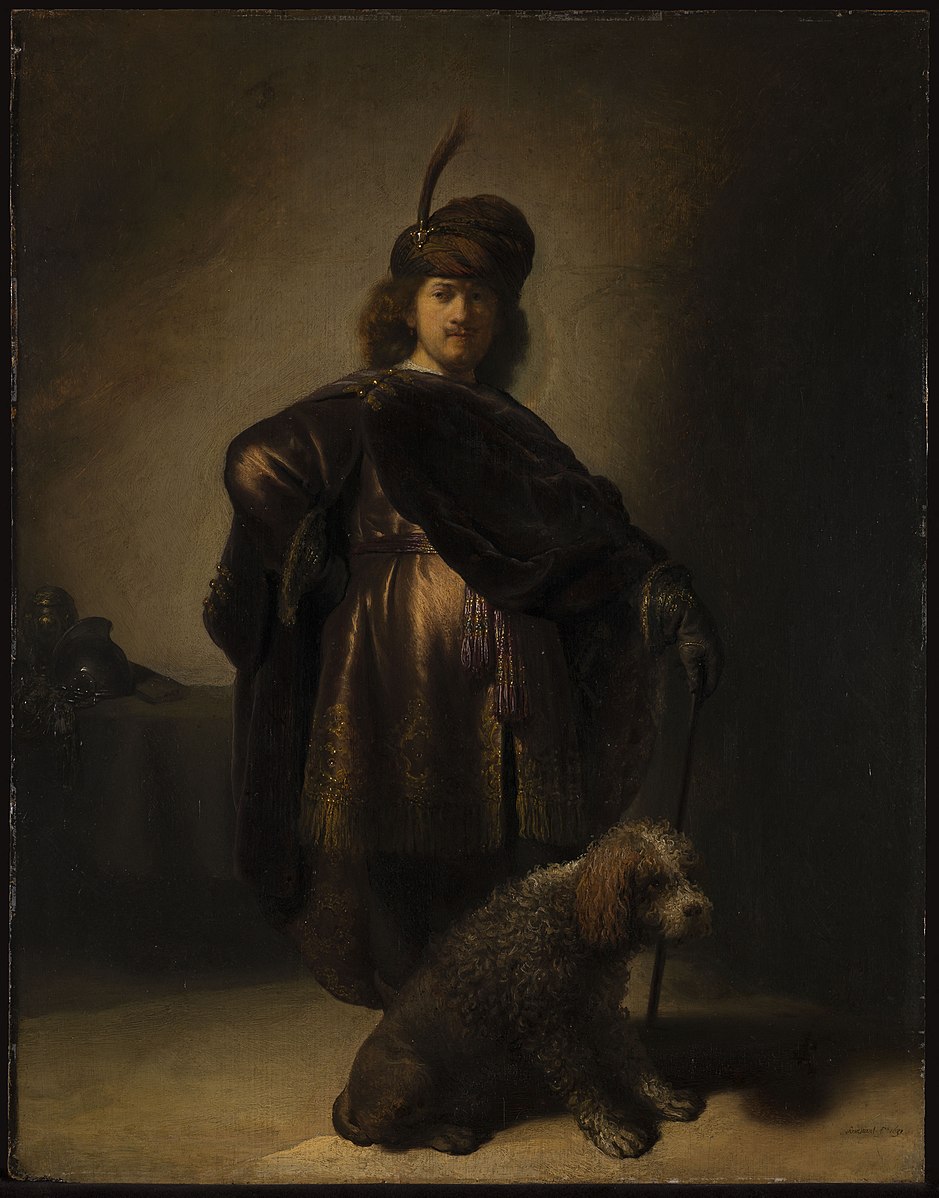
Self-Portrait in Oriental Costume
Item
-
Title
-
Self-Portrait in Oriental Costume
-
Creator/author/artist of the original item
-
Rembrandt
-
Date
-
1631
-
Description
-
Baroque art emerged in Rome during the late sixteenth century in response to the orderly and predictable art of the Renaissance. This artistic movement is characterized by theatrical and oversaturated subjects and scenes intended to invoke emotional reflection and introspection within the viewers (Wiesner-Hanks, 414). It accomplished this partially by the stark light and shadows throughout the paintings. Caravaggio was the first to implement such a such a strong singular light source with deep shadows, but baroque painters after him, such as Rembrandt, followed in his wake (Wiesner-Hanks, 414). Baroque was also intended to be a celebration of leaders and their power, whether it be religious or secular. Louis XIV’s Versailles, for example, is in the baroque style and overtly acts as a piece of propaganda for the king and his sovereign power.
Rembrandt, a baroque artist lived and worked out of the Netherlands in the sixteenth century. He is considered one of the Dutch masters of the time, others of whom were Franz Hals and Jan Vermeer (Wiesner-Hanks, 416). Each of these artists perfected a subject matter whether it be landscape, or as it was for Rembrandt, portraiture. Having painted about 100 self-portraits, he depicted “individual personalities often engaged in introspection” (Wiesner-Hanks, 416). These painting were not made for specific wealthy patrons, but instead were made to be sold at art fairs and markets which became popular gathering places for people who wanted to be involved with the arts and culture of the time.
In Rembrandt’s Self-Portrait in Oriental Costume, he depicts himself standing in a darkly lit space with eastern-style clothes and a turban. This reference to eastern culture is due to the vast trade network the Dutch had with Asia, and the large supply of Asian goods in the Netherlands during the 16th century (Wiesner-Hanks, 525). The primary export from Asia was spices, there were so many spices imported into the Dutch ports that prices depressed and profit decreased. In order to regulate this, they created the Dutch East India Company which acquired a national monopoly on spices and trade in the 17th century. The Dutch presence in trade within the Indian Ocean decreased after some time, due to their inability to expand beyond spice trade and to deal with political developments (such as the massacre of Chinese laborers) (Wiesner-Hanks, 528). However, when Rembrandt made this self-portrait, Dutch trade with Asian countries was at its peak as a prominent component of everyday life.
-
Place
-
Amsterdam
-
Source Citation
-
Wiesner-Hanks, Merry E. “Early Modern Europe, 1450–1789.” 3rd ed. Cambridge History of Europe. Cambridge: Cambridge University Press, 2022. doi:10.1017/9781009160797.
-
Rights / License
-
Rembrandt, Public domain, via Wikimedia Commons