-
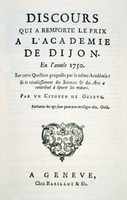 Discourse on the Arts and Sciences
 A massively controversial debut, Jean-Jacques Rousseau’s “Discourse on the Arts and Sciences” burst onto the scene in 1750, winning an essay contest sponsored by the Academy of Dijon on “whether the restoration of the Sciences and the Arts has contributed to the purification of morals.” This prompt illustrates a common Enlightenment narrative. The “restoration of the Sciences and the Arts” speaks to Renaissance humanism and the rediscovery of classical texts, which was commonly framed in this period as a sharp break from the prior “dark ages,” bringing about technological, scientific, and cultural innovations. However, Rousseau’s discourse took a strong, unpopular stance against the moral benefits of the popularization of the arts and sciences. Moreover, this essay serves to exemplify the stage for intellectual disagreement that became prominent in the Enlightenment. Along with furious debate and investigation among intellectuals, this period saw the rise of the public sphere, where citizens gradually became increasingly invested in politics, philosophy, science, and more. Rousseau argues that modernity has forced people to live insincerely, engendering a smallness of soul within them. Examining modern society, Rousseau explicates how citizens see themselves as rational pursuers of self-interest (beginning with Machiavelli’s break from the high-minded and abstract “virtue” of classical political philosophy). Figures like Locke and Hobbes, writing after one of the deadliest periods of religious strife in European history, sought to ground society in self-interest and create institutions that could guide a rational citizenry to minimize violence and incentivize the “common good.” In stark contrast, Rousseau vividly paints a dispiriting portrait of a society where the thing one wants the most is to swindle their neighbor, for there is no legitimate profit that cannot be outdone by an illegitimate profit. The only thing preventing one from conquering their peers is the law, the institutions that citizens begrudgingly agree to follow out of fear. Even though the restoration of the arts and sciences has brought about great discoveries about the orbits of the heavenly bodies, Rousseau asks if mankind is better governed or more virtuous because of this. Interestingly, Rousseau does not argue entirely against the arts and sciences, but rather against their popularization. Near the end of his discourse, he describes how brilliant minds like Bacon, Newton and Descartes, “Preceptors of Mankind,” should pursue the sciences and the arts, but should not share their findings with the public (Rousseau 59). It is in the dissemination of their findings and the visible rewards and praises of these figures, that Rousseau observes corruption. These are the sources of the dogmatic embrace of skepticism and reason that Rousseau finds in so many “pseudo-intellectuals” and sophists who parade around undermining the foundations of morality like religion and love of the fatherland (grounded in customs and beliefs, not reasoning). Whatever a society rewards, it inherently encourages, and Rousseau sees himself surrounded by people who are widely honored and massively wealthy thanks to their talents as writers, artists, etc., regardless of the quality of their character. This encourages people to pursue money and glory rather than virtue. Ultimately, Rousseau’s “Discourse on the Arts and Sciences” set the foundation for his political project, the legacy of which is deeply complex and played a major part in political revolutions (especially the French Revolution). Much like Rousseau, the Enlightenment shares a complicated legacy. While many movements of the nineteenth, twentieth, and twenty-first century used Enlightenment concepts in their efforts to expand the rights of different groups, it is critical to note that “The Enlightenment has been seen as both a liberating movement that resulted in the revolutions of the later eighteenth century, and an authoritarian movement that justified racism and European imperial domination” (Wiesner-Hanks 389).
-
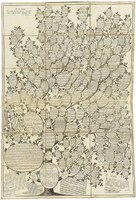 The Tree of Knowledge
 The Tree of Knowledge is a diagram of the entire system of knowledge mapped out by Diderot and d’Alembert in the Encyclopédie in the 18th century. This map was intended to visualize all of the world’s knowledge, as well as its sources and the branches that extend from them. The central trunk is labeled as “understanding” and other branches of “memory”, “reason,” and “imagination” act as the three main offshoots. Because humans cannot follow more than one mental route simultaneously, Diderot reflects this discreetness by using imagery of a tree; just as in the mind, one cannot follow more than one tree branch at a time (Lord). From the central trunk, one can see all of the potential routes that one can embark on.
The placement of the arts in relation to the rest of the tree is an interest aspect worth investigating further. The arts is the only subsection which sits emerging from the “imagination” source. This is reflective of how people of this time thought of the arts as not relating to reason or empirical thought. At least, that is how Voltaire wanted people to perceive art. In his novel, Candide, Voltaire criticizes those who critique art (Candide, 90). When discussing a play, Candide explains that he quite liked an actress in the show, while the critics who he sat next to thought she was terrible. Candide strongly believes in enjoying art for art’s sake, and not trying to rationalize artistic decisions with reason or memory. Candide emphasizes the importance of not overanalyzing what is beautiful to the point of nonsense.
-
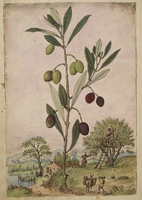 Olive Illustration
 This 16th century plate of the branch of an olive tree (Olea europaea) was illustrated by Gherardo Cibo, an Italian artist and herbalist. It is taken from a work of herbal medicine, *Discorsi on Dioscorides' De Materia Medica* by Pietro Andrea Mattioli, first published in Italy in 1554. *De Materia Medica* is a first century encyclopedia of herbal medicine by Dioscorides, a Greek botanist/physician. In addition to its main olive branch, this plate depicts a typical image of contemporary Italian agriculture in the background. Until the Risorgimento in the nineteenth century, Italy was a predominantly agrarian economy based in dry farming with little irrigation. The Italian soil and climate did not sustain heavy horses and plows well so “Manpower and the hoe, rather than horsepower and the plough, limited the productive capacity of the land” (Kuehn 2002). Traditional Italian crops included cereals, vines, and olive/fruit trees. However, in the sixteenth and seventeenth centuries, mulberry trees, silkworms, maize, and rice (mostly just in Northern Italy) also became critical. Because the agrarian calendar kept agricultural workers seasonally under-employed and women workers often in the home, low wages and piece rates could keep production costs down. Proto-industrialization, or the putting out system, transferred industries to the rural countryside and “took advantage of cheap peasant labour” (Kuehn 2002). As the main source for heat, fuel, cooking, and construction, wood and forests were an essential part of Italy’s pre-industrial economy as well. After 1550, promiscuous culture exploded in popularity and helped increase yield, raise soil temperatures, and extend the growing season. Promiscuous culture is a multi-crop system coming from the Romans where the interplanting of understory and overstory crops is used to help save labor, smother weeds, and shield the ground all year. In addition, the Mezzadria sharecropping system was prominent in this period. A Mezzadria was a contract between a proprietor of land (padrone) and a laborer (mezzadro) which often involved intense labor and saw the laboring families end up in debt (Hanlon 2000). While Renaissance era Italy had been a source of economic power in Europe thanks to “banking, organized business procedures, and large-scale cloth production,” this was no longer the case in the early modern period (Wiesner-Hanks 487). While Northwestern Europe witnessed dramatic economic expansion thanks to technological innovations, urbanization, and dense networks of exchange, Italy remained grounded in agriculture and hindered by its disunification. By the eighteenth century, “Genoa and Venice had been eclipsed by Amsterdam and London” (Wiesner-Hanks 487).
-
 Sample Google Form Quiz
-
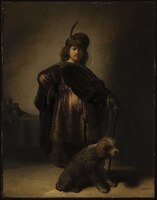 Self-Portrait in Oriental Costume
 Baroque art emerged in Rome during the late sixteenth century in response to the orderly and predictable art of the Renaissance. This artistic movement is characterized by theatrical and oversaturated subjects and scenes intended to invoke emotional reflection and introspection within the viewers (Wiesner-Hanks, 414). It accomplished this partially by the stark light and shadows throughout the paintings. Caravaggio was the first to implement such a such a strong singular light source with deep shadows, but baroque painters after him, such as Rembrandt, followed in his wake (Wiesner-Hanks, 414). Baroque was also intended to be a celebration of leaders and their power, whether it be religious or secular. Louis XIV’s Versailles, for example, is in the baroque style and overtly acts as a piece of propaganda for the king and his sovereign power.
Rembrandt, a baroque artist lived and worked out of the Netherlands in the sixteenth century. He is considered one of the Dutch masters of the time, others of whom were Franz Hals and Jan Vermeer (Wiesner-Hanks, 416). Each of these artists perfected a subject matter whether it be landscape, or as it was for Rembrandt, portraiture. Having painted about 100 self-portraits, he depicted “individual personalities often engaged in introspection” (Wiesner-Hanks, 416). These painting were not made for specific wealthy patrons, but instead were made to be sold at art fairs and markets which became popular gathering places for people who wanted to be involved with the arts and culture of the time.
In Rembrandt’s Self-Portrait in Oriental Costume, he depicts himself standing in a darkly lit space with eastern-style clothes and a turban. This reference to eastern culture is due to the vast trade network the Dutch had with Asia, and the large supply of Asian goods in the Netherlands during the 16th century (Wiesner-Hanks, 525). The primary export from Asia was spices, there were so many spices imported into the Dutch ports that prices depressed and profit decreased. In order to regulate this, they created the Dutch East India Company which acquired a national monopoly on spices and trade in the 17th century. The Dutch presence in trade within the Indian Ocean decreased after some time, due to their inability to expand beyond spice trade and to deal with political developments (such as the massacre of Chinese laborers) (Wiesner-Hanks, 528). However, when Rembrandt made this self-portrait, Dutch trade with Asian countries was at its peak as a prominent component of everyday life.
-
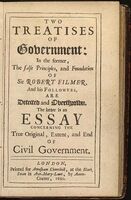 Two Treatises of Government
 John Locke’s *Two Treatises of Government* was a major work of political philosophy that refuted the theory of the divine right of kings and set the stage for the emergence of the middle class. Locke’s writings, however, can only be properly understood in the context of 17th century European politics. After the death of Queen Elizabeth I in 1603, her cousin James I succeeded her. Lacking the tactical adeptness of his predecessor, James’ tenure was marked by struggles with Parliament about spending, marriages, and religion. By the time Charles I took over in 1625, the country was increasingly divided and his leadership only worsened matters. Eventually, tensions between Parliament and the Crown boiled over into civil war and Charles I was executed in 1649. Until 1660, England was in a period of Interregnum, in which they attempted various forms of republican government. However, when Oliver Cromwell passed away, his son Richard succeeded him as Lord Protector and did not have the power base between Parliament and the military to lead. Thus, the crown was restored with the son of Charles I, Charles II. But when Charles II died in 1685, the throne fell to his brother James II. Since James II was Catholic, the English were very opposed to his succession, resulting in the Glorious Revolution of 1688, which deposed James II and installed the Protestant William III and Mary II, confirming the primacy of Parliament over the Crown. Beyond just defending the Glorious Revolution, Locke’s writings established a new understanding of the purpose of government. Perhaps even more importantly, Locke’s project of political philosophy helped change individual citizens’ understanding of their relationship to their rulers. Drawing on the authority of God and examining the conditions of humans living in their ‘natural state’ before entering into societies and forming governments, Locke asserts that all people have property (including both the things one possesses as well as one’s “life, liberty, and estate, which he describes, somewhat vaguely, as ‘natural rights’ given to humans by God”) that they are naturally inclined to protect and improve (Wiesner-Hanks 383). For Locke, one can attain a natural right to an object of nature when they mix their labor with it (e.g. when a person cultivates a field, they have earned the right to that property and the fruits of its harvest). Since God commanded men to cultivate the earth, people should ‘improve’ the Earth by being industrious and rational, pursuing the expansion of their property and increasing the productivity of the Earth. Society, therefore, is an agreement among individuals in the state of nature who decide to sacrifice some of their natural freedoms in order to pursue the expansion of one’s property with a general network of protection and recourse in the event of disagreements, which all too easily become wars in the state of nature where nothing prevents one person from conquering another. This is a starkly distinct understanding of one’s purpose in life that minimizes the influence of the religious sects, “noble aristocrats,” and monarchs responsible for many of the problems of Locke’s times. Instead, after the brutal religious strife that decimated Europe in the 17th century, Locke is valorizing work, reason, and personal happiness, arguing that the purpose of government is to increase population and encourage industrious behavior.
-
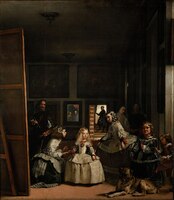 Las Meninas
 Diego Velázquez’s painted Las Meninas in 1656 for the king of Spain. This was during the Habsburg Empire which was when Spain was at the peak of its political and economic power. However, in the latter half of the 17th century, Spain and its economy began to decline throughout the country due to the decrease in silver and silver tax revenue which came from New Spain and the importation of silver (Elliot, 173). The production of art and culture follows this trend as more works were produced when Spain was succeeding, while less were produced as the country struggled (Stewart).
Velázquez was the court painter to King Phillip IV and was very concerned with his own ranking within society. Regarding his painting style, he was inspired by Caravaggio from Italy and his striking lighting and dramatic colors (Wiesner-Hanks, 416). It was this talent as well as his ability to use impressionist brushstrokes, a technique never seen before, that caught the eye of Phillip IV. He became the main painter for the Habsburg royal family and worked with them for over thirty years. The long-term commitment that both parties had to the relationship between Velázquez and the Habsburg family proves how important reliable relationships were to the people of this time. In in order to maintain an Empire throughout centuries, it needed to be built off of strong relationships, even within less people such as the court painter.
Las Meninas is considered a masterpiece among art historians, but it has troubled them for centuries as they try to decipher what Velázquez intended. What appears to be the main subject of the painting is the Spanish princess as she is being tended to by her ladies-in-waiting. However, when looking at the left of the scene one can see Velázquez himself working at a large canvas; the mirror behind him reflects the true focus of the painting, King Phillip IV and his queen (Stewart). This painting was hung in Phillip IV’s office, and so it is hypothesized the Velázquez painted the scene as he did so Phillip IV could always be gazing people most important to him, as he did when he was posing for the portrait (Stewart). By including himself in this painting, Velázquez is securing his position as an important figure in the Habsburg family, ensuring that even when Spain had a drastic economic decline he would still be secure.
-
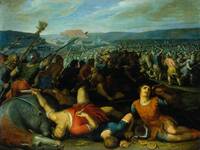 Batavians Defeating Romans on the Rhine
 *Batavians Defeating Romans on the Rhine* is a painting by Otto van Veen, made around the year 1613. It was commissioned by the States General of the Dutch Republic. It depicts a moment in the ancient history of the Netherlands, during the revolt of the Batavi against the Roman Empire from 69-70 AD. The Batavi were a tribe inhabiting the Roman province of Germania Inferior, which consisted of much of modern-day Belgium and the Southern Netherlands. Led by Gaius Julius Civilis, Batavian auxiliaries turned on the Roman Empire and seized many fortresses and much of the Roman Rhine flotilla, then defeated two legions in a battle.
In the foreground of the painting, three figures and a horse are sprawled, in various states of death or dying. On the left there are several charging soldiers, holding aloft an assortment of standards. One of these standards is an eagle, indicating that these soldiers are Roman. They are charging forward towards the background of the painting, where large masses of soldiers are having a battle on the banks of a river. The river, in the left of the background, contains a number of ships.
In the context of 1613, this painting and the conflict between the Batavi and Rome can be seen as a stand-in for the Eighty Years War and the conflict between the fledgling Dutch Republic and the Habsburg Spanish Empire. In the 16th and 17th centuries, the Batavians were increasingly being considered to be the ancestors of the Dutch. The image of these ancestral figures heroically rebelling against the foreign occupation of the Roman Empire, parallels the Dutch rebellion against their occupation by the Spanish Empire. The parallel is especially strong given that the Austrian Habsburg line, as leaders of the Holy Roman Empire, still held the title Imperator Romanorum.
In their declaration of independence, the Dutch States General argued that their reason was “for maintaining the rights, privileges, and liberties of our countrymen,” and “to secure our ancient liberties and privileges” (pp. 10). The keywords ‘countrymen’ and ‘ancient’ point towards an increasing development of a Dutch national identity. The development of a national identity often relies heavily on an appeal to an imagined ancient community – here, we see the Dutch identifying the Batavi as ancient predecessors of their own nation. When the Dutch East India Company captured Jakarta in 1619, they renamed it Batavia (Weisner Hanks 500) – this renaming shows that the idea of a Batavian origin was strong in the Dutch consciousness during this time period. The Dutch States General, by commissioning this work, contributed to a growing national identity and characterized the ongoing Dutch Revolt as a continuation of 1500 years of national struggle towards independence.
-
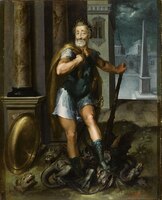 Henry IV as Hercules Slaying the Lernaean Hydra
 King Henry IV was an incredibly productive and charismatic leader in the 16th century early modern France. He was known as “Henri le Grand” for all he did to stabilize France (Collins, 24). He increased the power of the centralized government by mediating the conflicts between religious groups within the French Wars of Religion and stabilizing royal finances. Henry was born as a Protestant and was initially king as a Protestant. However, with the Catholics and Protestants already in a decades long war, Henry needed to do what he could to end the disagreement. Therefore, “he converted to Catholicism in 1593, married a devout Catholic, and successfully sought better relations with the Pope” (Collins, 24). Each of these moves was incredibly calculated as Henry did what he could to get the Catholics on his side. He also issued the Edict of Nantes which providing French Protestants with legal recognition which allowed them to continue practicing (Collins, 24). Henry also stabilized royal finances by working with the Maximilien de Béthune, the duke of Sully who repaid royal debts and provided statements of government finances (Shennan, et al.). By initiating trade between France, Spain, and England, Henry further encouraged France to prosper (Shennan, et al.).
This painting which depict Henry IV as Hercules slaying the Hydra represents Henry as both a strong political leader and individual. Henry was also known as a strong and charismatic leader, and visual propaganda was the most effective way of persuading the people of France to support Henry and his reign. The people of France all knew Hercules to be a larger-than-life figure, and to depict Henry in Herculean garb would suggest Henry to be just as powerful. The Hydra was often used in this period to represent political enemies, and so Henry defeating the beast reflects his settlement of the religious wars by defeating the Catholic Holy League (Dias Pacheco). The lack of heavy armor on Henry also reflects a common trope in visual propaganda of depicting strong figures as not needing any external protection (Collins, 1).
-
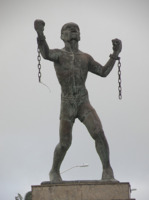 The Emancipation Statue ('Bussa')
 *The Emancipation Statue* is a public sculpture in Barbados that depicts the leader of a slave rebellion in 1816 valiantly breaking his chains in an expression of his humanity. Created in 1985 by Bajan sculptor Karl Broodhagen, the bronze statue is often called ‘*Bussa*,’ the name of an enslaved person who actually helped inspire the 1816 revolt. This statue highlights the impact of slavery on the history of Barbados, one of many places in the ‘New World’ that would be dramatically altered by the “European voyages, trading ventures, and colonization” of the 16th and 17th centuries (Wiesner-Hanks 291). Between 1625 and 1807, about 2.7 million enslaved Africans were brought to the British Caribbean. More than 500,000 enslaved Africans were brought to Barbados alone, an island of just 166 square miles. By 1680, Barbados was the richest, most populous, and most highly developed colony in British America and by the late 1770s, the average white person in the British West Indies was making over ten times as much money as the average white person in other parts of the British Empire, including England (Brueckmann 2024). Beyond Barbados though, Europe’s colonization of the ‘New World’ also “encouraged warfare, siphoned off productive workers, and destroyed kinship groups” on the west coast of Africa (Wiesner-Hanks 291). In addition, “the Spanish quickly conquered the large and prosperous Aztec and Inca empires” in the Americas thanks to “the rapid spread of European diseases” which ultimately killed most of the indigenous population in many places (Wiesner-Hanks 291). The ‘New World’ would soon be characterized by agricultural plantations, Christian churches, and diverse populations that included Europeans, Africans, and Indigenous peoples. It is critical to note the impact on this period of the widespread, insidious, and ethnocentric perspective that Europeans were superior to the indigenous peoples they encountered and were therefore ‘liberating’ these peoples from their backwards ways.
-
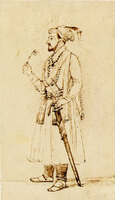 Shah Jahan, Standing with a Flower and a Sword
 *Shah Jahan, Standing with a Flower and a Sword* is an ink drawing on paper by the Dutch artist Rembrandt van Rijn. This drawing shows Shah Jahan, the Mughal emperor who reigned from 1628-1658 and the commissioner of the Taj Mahal. Jahan is dressed in a robe, scarves, several necklaces, and a feathered and bejeweled headwrap. He has one hand resting on the hilt of a sword strapped to his waist. In his other hand he carries a flower, which he is looking at. Jahan’s head is surrounded by a halo and is sending light in every direction.
This work is one of more than twenty drawings made by Rembrandt which were based on Mughal miniatures. Wiesner-Hanks says that Dutch artists, but especially Rembrandt “showed deep insight in their work, capturing individual personalities often engaged in introspection” (396). In this drawing, although it is not one of Rembrandt’s standard portraits, I do think that there is a depiction of introspection through Jahan’s consideration of the flower.
This drawing is particularly interesting in how it relates to the Netherlands’ position in the world in the 1650s. The Dutch East India Company had been established in 1602 and begun to build and seize fortified trading posts in the vicinity of the Indian Ocean. In 1619, they had captured Jakarta, and by the time of this painting had seized many of Portugal’s outposts in the Indian Ocean (Wiesner-Hanks 500-501). The Dutch East India Company in this time period had been granted the right to trade in many of the Mughal Empire’s port cities, and through this relationship goods were flowing back and forth between the Mughal Empire and the Netherlands.
Although we do not know exactly from whom Rembrandt acquired the figures he based this drawing off of, his possession of Mughal artwork is indicative of the increased exchange of both material goods and ideas between India and Europe in the 17th century. He also did all of this series of drawings on paper imported from Asia, again showing the flow of material goods. Although Rembrandt is most famous for other works, this drawing is particularly illustrative of the way that colonialism affected the world of art. Rembrandt here is imitating and learning from the Mughal style of art, and fusing his own tradition of art with a tradition from an area of the world that his country was colonizing. This drawing is a good reminder of the way that colonial relationships brought about cultural exchange.
-
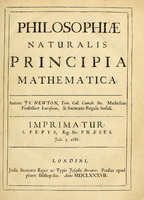 Philosophiæ Naturalis Principia Mathematica or The Principia
 Pictured here is the title page of the first edition of Sir Isaac Newton's *Philosophiæ Naturalis Principia Mathematica* (or *Mathematical Principles of Natural Philosophy*). It was published on July 5, 1687 and introduced Newton's laws of motion as well as his law of universal gravitation. Often simply called *The Principia* Newton's book comprises three volumes and was written in Latin. Newton had been a student, and then professor, of mathematics at Cambridge and had studied mechanics and cosmology, even building the first working reflecting telescope. In addition, Newton’s development of calculus set the foundation for the majority of modern engineering, physics, and mathematics. *The Principia*, however, was Newton’s most famous work as it brilliantly synthesized Kepler’s findings regarding motions in the heavens and Galileo’s discoveries about motion on earth into universal laws expressed in mathematical terms. Newton went on to be elected to Parliament multiple times and become president of the Royal Society. In the eighteenth century, his ideas began to be applied to the study of heat, light, magnetism, and electricity. It is also important to contextualize Newton’s achievements in the backdrop of the Scientific Revolution, a “time of change in the way learned individuals approached, conceptualized, and studied the natural world” (Wiesner-Hanks 385). This period saw people all over Europe inventing equipment that is still used in laboratories today (beakers and balance scales) while also experimenting with chemical changes and the application of alcohols and acids (often rooted in alchemy). The discoveries of Kepler, Galileo, and more served as major contributions to Newton’s ideas and it is crucial to note how the broader ideological shifts leading up to Newton included critical developments such as the English philosopher and statesman Francis Bacon’s formulation of the scientific method, a sterling example of the contemporary notions of empiricism and the rejection of dogmas.
-
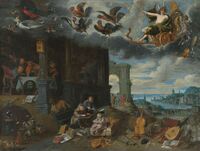 Glorification of Commerce and Science
 *Glorification of Commerce and Science*, also called *The Children of the Planet Mercury*, is an oil painting by Jan Bruegel the Younger, the grandson of Pieter Bruegel. In this painting, we have educated individuals studying and conducting science in the left and bottom, while in the background there is a harbor where other citizens watch plays and race horses. Above it all, the god Mercury is riding in a chariot pulled by various birds. Various instruments, sporting equipment, and games are being poured out of his chariot by a monkey.
Thematically, I think that this painting is contrasting diligence and diversion. We have scientists and children studying in the foreground, while in the background crowds of people are dancing and watching a play. In the bottom left corner we have monkeys doing alchemy, while in the bottom right we have monkeys playing dice, and the monkey in Mercury’s chariot is pouring means of diversion, like instruments and decks of cards, into the world.
This painting connects with our class material in that it shows a fascination with scientific instruments, the character of the scientist, alchemy, and the education of children. On the left side of the painting we can see a group of scientists huddled around a table, with an astrolabe and a globe nearby and papers on geometry and the building of fortifications in the foreground. Beneath these scientists, in the bottom left corner, we see three monkeys working an alchemical furnace in order to distill a brown liquid. At the bottom of the painting there are three children studying. On the ground nearby are several books in various disciplines. The books cover topics such theology, poetry by Virgil, medicine by Galent. This mixing of theological, classical, and scientific texts is a good reminder of Wiesner-Hanks’ point that the Scientific Revolution should not be characterized as a battle between religion and science (378). This is not to say that the relationship between science and religion was not something people in the period were considering. In the painting, there is a book marked ‘D. Faust’ among the children’s books. Faust was a legendary figure whose desire for knowledge led him to make a pact with the devil. It is hard to say what Bruegel meant by the inclusion of this book, but I might speculate that the legend of Faust showed an anxiety in society about the relationship between educated individuals, science, and religion. Societal preoccupation with figures like Faust helps explain some of the hostility that Galileo describes in his *Letter to the Grand Duchess*.
-
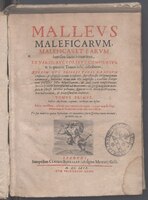 Malleus Maleficarum
 The practice of witch hunting was prominent throughout the 15th century, and by using the texts that were published during the time we are able to formulate a full understanding of this phenomenon. The Malleus Malleficarum is a text written in 1486 by a German Dominican Friar, Heinrich Kramer. He was authorized by the pope to hunt witches in southern Germany, and he did so with a heavy hand. After the time he spent torturing and executing women, he wrote Malleus Malleficarum, or, The Witches’ Hammer, commanding his audience to be wary of women and their propensity for witchcraft. According to Kramer, “all witchcraft comes from carnal lust, which in women is insatiable” (Wiesner-Hanks, 455). The thesis of Kramer’s Malleus Malleficarum claims that women alone have qualities that turn them to work with the devil. The misogyny throughout the witch hunt is especially prevalent in the search for a “witch’s mark” (Wiesner-Hanks, 460). Men would strip and shave the women, searching for a mark that proved that they had been touched by the devil. This clearly shows the practice of sexual assault that was common during these hunts, and how women were stripped of their agency and taken advantage of. Kramer explains other methods of torturing the accused witches such as “swimming” them. This practice involved throwing the woman into a body of water and watching to see if she sinks or floats, sinking (and drowning) meant she was innocent, while floating (and surviving, only to be executed later) meant she was a witch. (Wiesner-Hanks 459). Kramer’s publication was so influential not only because of the evocative messages throughout the book, but also because with the invention of the printing press, many people throughout Europe were able to read his guide to identifying and stopping witches. This quick spread of information led to a kind of mass hysteria and genuine fear of and belief in witches.
-
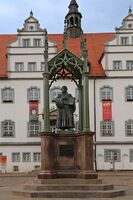 Martin Luther Monument
 Pictured here is the oldest monument dedicated to Martin Luther, located in Wittenberg, Germany. Unveiled in 1821, it was designed by Johann Gottfried Schadow and is similar to several subsequent Luther statues that present him in a castle structure in order to nod to his prominent hymn “Ein feste Burg ist unser Gott” (“A Mighty Fortress Is Our God”). Wittenberg is a key place in the history of the Reformation as Luther was a professor of theology at Wittenberg University. A major part of Luther’s lore as a hero of religious freedom is the story of how he posted his Ninety-Five Theses upon the door of the Castle Church on October 31, 1517. In truth, Luther’s first serious action against the church was his letter to Archbishop Albert of Brandenburg, written in the form of ninety-five theses. Although later biographies claimed he had boldly nailed these theses to the door of the Castle Church, Luther’s theses were written in Latin for an audience learned in theology, making them fairly inaccessible to the ordinary church-goer (Wiesner-Hanks 168). Nonetheless, Luther’s writings decried the Catholic Church’s hypocrisy, corruption, and practice of selling indulgences (certificates that could be purchased in order to reduce the punishment for sins in purgatory) while emphasizing following the scripture before institutions like the church with human actors that can be corrupted. Ultimately, Luther’s efforts turned into a movement (in no small part thanks to the innovation of the printing press) and Europe found itself embroiled in an internal conflict as “Protestant and Catholic political authorities all thought that their territories should have one official state church” and groups who “were considered radical…were intensely persecuted and often forced to flee from one place to another” (Wiesner-Hanks 197). As the Reformation spread, more than a century of religious war broke out, beginning in Germany and Switzerland and then also affecting France and the Netherlands.
-
 Gunpowder
 Gunpowder was a key item in Europe beginning in the 13th century, though it was first invented in China in the 12th century and did not reach the west until the Mongols spread gunpowder technology into Europe. The influence of gunpowder it became especially prevalent in the 14th century with the rise of Niccolò Machiavelli and his value in role of war in a nation’s success. In Machiavelli’s words, “when princes think more of luxury than or arms, they lose their state” (Wiesner-Hanks, 95). Machiavelli believed that nobles, instead of concerning themselves with frivolous aspects of a wealthy life, needed to focus their efforts on broadening their political influence in order to encourage a prosperous state.
As wars raged throughout the 14th and 15th centuries in Europe, armies began to use gunpowder technology to increase their success on the battlefield. Initially, the cavalry, a group of soldiers on horseback with swords, was the primary force used in battles. These soldiers were typically nobles who would participate in battles as propaganda to encourage their people to support them (Wiesner-Hanks, 99). They were able to ‘fight’ in battle, while still literally sitting above the other soldiers. Now with the common foot soldiers wielding firearms, the nobles atop horses were less notable. To compensate for this, nobles were given pistols, a short-barreled firearm that allowed them to shoot from a very close range, reestablishing the social hierarchy within the army (Wiesner-Hanks, 99). While firearms and gunpowder made battles much more efficient, even beginning what some have called a “military revolution”, it was very expensive technology (Wiesner-Hanks, 101). Only kings, sultans, and emperors could afford to outfit their entire armies, nobles and other people in power did not have nearly enough funds to provide firearms for armies of thousands of people. Gunpowder is one of the most impactful technologies of military advancement, one that Machiavelli would be in full support of.
-
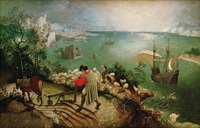 Landscape with the Fall of Icarus
 *Landscape with the Fall of Icarus* is a painting in oil on canvas painted either by Pieter Bruegel or an unknown artist copying Bruegel's original. The painting depicts the aftermath of the story of Icarus. In Greek mythology, Icarus is the son of the inventor Daedalus. He escapes imprisonment using wings made by his father, but in the process flies too close to the sun. This causes the wax holding his wings together to melt and him to plummet into the ocean and die.
What is interesting about this painting is that it does not center on Icarus - he can only be seen as a pair of legs floundering in the ocean on the bottom right. A nearby fisherman pays his drowning no attention, and the central figure is a peasant in the foreground, who is looking towards the ground. This peasant seems totally occupied with his work and ambivalent towards the drowning of Icarus. One might speculate that the theme is man's ambivalence towards the suffering of others. Such a theme would not be out of place in the 16th century Low Countries. Although the Eighty Years War would not start in Bruegel's lifetime, the Reformation had already hit the Netherlands. With sizable communities of Calvinists and Anabaptists developing, religious persecution was on the rise.
Throughout his career, Bruegel took peasants as his primary subject matter. This concern with peasant lifestyle and the peasant mind is interesting in that it follows not long after the German Peasants War. WIth the advent of the printing press, the concerns which troubled peasants could be written down and widely distributed. We see this in the Twelve Articles of the Peasants of Upper Swabia, in which peasants list their issues with their economic and political arrangements and give religious arguments against these arrangements (Baylor 76-82). These peasants were not 'keeping their eyes on the ground'. This is not to say that Bruegel had any political interpretation in mind. It is only to say that at the time, what sorts of things peasants should concern themselves with was an open and debated political question.
-
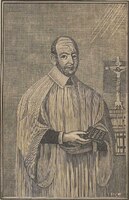 WIKIMEDIA EXAMPLE: Jean Darche, Le saint abbé Bourdoise
 Taken from the book *Le saint abbé Bourdoise, réformateur du clergé et promoteur des séminaires en France, son époque, sa vie, ses écrits, ses miracles, son influence sur ses contemporains* (note the book title surrounded by asterisks). This image appears by the title page of the book (page 6). The illustrator engraved their name into the image.
-
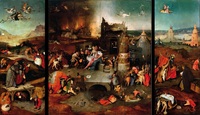 Triptych of the Temptation of St. Anthony
 This piece is a triptych, a work consisting of three connected panels, made from oil on oak. It was made by Hieronymus Bosch, a Dutch artist of the Northern Renaissance.
The painting shows three scenes, each from the life of Saint Anthony. Saint Anthony was an early Christian figure, a man who left his worldly life in favor of a more spiritual life of isolation in the desert. According to legend, this movement into the desert led Saint Anthony to be harassed by hordes of demons.
This painting shows a concern with the abundant evil of the world, something that preoccupied the thoughts of northern 'Christian humanists'. For instance, in "The Praise of Folly" Erasmus notes the danger posed by "wicked prelates" (Wiesner-Hanks 142). In the left panel, Bosch draws a demon with the head of a stag, garbed in the robes of a priest. In the center panel, very near the praying figure of St. Anthony, we can also see a demon disguised as nun, and below this a rat-faced demon with the tonsured haircut of a monk reads from a book. These characterizations of religious figures as sinners or demons in disguise give us a window into the perspectives some people at the time had about religious figures, which contextualizes the emphasis on church reform of many Northern humanists.
The world Bosch depicts in this painting is one of ubiquitous evil, one where evil abounds in forms both open and disguised. This assumption is echoed by Vives in his “The Education of a Christian Woman”, when he argues that humans need “knowledge of good to protect us from the constant onslaught of evil” (63). In different ways, Bosch and Vives both depict authentic religiosity as creating an island of good within a world which is a sea of evils.
-
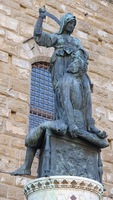 Judith and Holofernes
 Sculptors of the Renaissance around the 14th century were heavily influenced by the artists of ancient Greece and Rome, and often looked to them for inspiration as they carved their own works. While these ancient sculptures were created in workshops with many artists and apprentices working together, the Renaissance sculptor Donatello worked alone (Vasari, 189). He lived in the 14th and 15th centuries in Florence, Italy and was passionate about reinvigorating the beautiful traditions of ancient Greek sculptures. He reflected this in his sculptures through “spatial depth, dramatic scenes, classical themes and settings, expressions of weight and force” (Wiesner-Hanks, 160). He was especially concerned with depicting the natural world through idealizations. Artists of this time believed that the purest forms were found in nature, though they also acknowledged nature's visual imperfections. To compensate for this, artists would create an illusion of the natural world, disregarding its flaws (Wiesner-Hanks, 160). Donatello built upon the techniques of the ancients, breathed life into his sculptures, and idealized the natural form particularly in his sculpture of the Bible story of Judith and Holofernes. In 1455 the Signoria of Florence commissioned Donatello to make this bronze sculpture for it to be displayed in the piazza (Vasari, 179). The close relationship of religion and politics and the emphasis on Christian reformation resulted in a lot of religiously inspired art, especially when the art was commissioned by the government. This sculpture depicts Judith of Bethulia which was besieged by General Holofernes and the Assyrians. Donatello portrays the moment in which Judith decides to free her city by killing Holofernes. This sculpture expertly depicts the strength from God found within Judith as she stands up tall with her eyes gazing forward, frozen in the moment after she has brought down her sword on Holofernes’ neck. This feminine power is clearly contrasted with Holofernes’ limp body and closed eyes as he is overcome with death (Vasari, 179). Even in this moment of weakness however, Donatello depicts Holofernes with a sense of elegance, recalling the tendency of Renaissance artists to idealize their subjects.
-
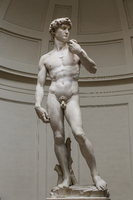 David
David Commissioned by the city of Florence, Michelangelo’s *David* serves as a strong example of the changes Europe was experiencing during the Renaissance. Instead of portraying the young shepherd David in his traditional moment of victory over the giant Goliath, Michelangelo opted to depict a concentrated David preparing for battle intently. The statue celebrates a time that a republican government ousted the Medici family from power. From 1504 to 1873, the statue stood on the main city square, before it was moved inside to the Galleria dell’Accademia for protection from weather. The brilliance of *David* lies in its craftsmanship, a testament to the “innovative style” developed in this time by “artists, especially in Italy,” who “tried to achieve a sense of balance, proportion, and harmony in their buildings, depictions of the human form, and portrayal of the natural world” (Wiesner-Hanks 153). Michelangelo also exemplifies Renaissance-era changing conceptions around the role of artists. Italian painter and architect Giorgio Vasari popularized the notion of the creative genius and dubbed “skilled and highly trained artisans” in the select “major arts” of “painting, sculpture, and architecture” (like Michelangelo) as significant individuals who “should sign and take full credit for their work” (Wiesner-Hanks 128). It is also important to note that the influx of unique new cultural products was part of a broader movement popularizing the revaluation of classical arts and texts and engendering new perspectives on political life, gender roles, and literacy.
-
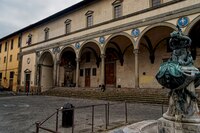 Ospedale degli Innocenti
 The Ospedale degli Innocenti was the first architectural commission of Filippo Brunelleschi, who is considered to be one of the very earliest Renaissance architects. Brunelleschi was the official architect for the first eight years of the project (1419 to 1427), during the same period of time that he was working on the cupola of the cathedral of Santa Maria del Fiore in Florence (Vasari 141, 158). However, he was pretty much absent after 1423, when he was elected to the Signoria (Vasari 158), so the building was completed around 1445 by other architects, who made their own changes to Brunelleschi’s vision. This photo shows the section of the building that was entirely completed by Brunelleschi– the arcade, which has nine arches supported by Corinthian columns. This represented a shift away from more traditional medieval architecture, in terms of overall appearance, use of detail, and construction methods (Britannica).
This building also tells us something about the society it was constructed for, however. The Foundling Hospital’s purpose is clearly tied to humanistic ideals, as it is affiliated with a guild, rather than a religion, as might have been the case earlier in time, or in other regions in Europe. In addition, it also gives us a glimpse into what life could be for babies born out of wedlock. For the mothers of these children, the Ospedale might have offered a chance of redemption, a way to both have their baby and avoid the shame of being an unwed mother (Wiesner-Hanks 71). The building itself had a basin where babies could be anonymously placed, providing both those in charge of the hospital and the mothers deniability (Museums in Florence). We can also surmise that in a society where half of children died before the age of 10, and teaching children how to perform specific tasks began around the age of five, that the Ospedale probably performed a combination of what we would think of as childcare in the modern day and vocational training (Wiesner-Hanks 64). This last is made even more probable by the fact that the hospital was run by the Wool Guild, which means that it could easily have provided training in the various aspects of wool production and refining to the foundlings left there.
-
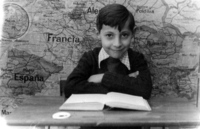 Joaquim Vila Burch
 School portrait of Joaquim Vila Burch, CEIP Eiximenis students, with a map of Europe in the background.
-
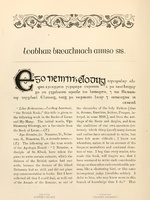 Leabhar breathnach annso sis : the Irish version of the Historia Britonum of Nennius
 This book has been considered by academicians and scholars of great significance and value to literature. This forms a part of the knowledge base for future generations. So that the book is never forgotten we have represented this book in a print format as the same form as it was originally first published. Hence any marks or annotations seen are left intentionally to preserve its true nature.
-
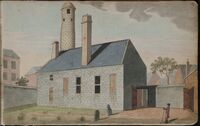 A view of the round tower of Michael of Pole in the city of Dublin
 A view of the round tower of St Michael le Pole and a schoolhouse in the area of Chancery Lane/Ship Street, Dublin. Two headstones depicted in centre foreground, while in the foreground to the left, a man leaning on a stick looks towards the buildings.
The rectangular structure is a schoolhouse which was built on the site of an earlier church on the condition that the tower was not to be pulled down The tower was so badly damaged by a storm in 1775 that it had to be demolished the following year.